Message from the President
Senshu University was founded in 1880. The University’s four founders—Nagatane Soma, Inajiro Tajiri, Tanetaro Megata, and Shigetada Komai—traveled to the U.S. to study at Columbia, Yale, Harvard and Rutgers Universities, respectively. After returning
to Japan, they founded Senshu Gakko (Senshu College, which later became the present Senshu University), seeking to give back to society by sharing what they had learned in the fields of economics and law. At the time, state-run colleges presented two
major hurdles for students—high tuition fees and requirements that students master Western languages and be familiar with Western texts. In Senshu Gakko’s Purposes for Establishment, the four founders made the significance of establishing the school very
clear: To remove these hurdles and widely recruit students with a strong desire to learn. Our founders’ mission was to provide professional education in the Japanese language more widely to foster the kind of talented people who would be able to support
the framework of our modern nation-state.
Through its history that spans over 145 years, the path for Senshu University has not always been smooth. The University has experienced its share of painful periods, especially in such events as the Great Kanto Earthquake of 1923, devastating World War II, the Great East Japan Earthquake of 2011, and the COVID-19 pandemic over the past few years. Thanks to the passionate commitment that the founders left us with when establishing the University, and to the dedication of all the faculty members and administrative staff, alumni, students, and parents throughout the years, Senshu has been able to overcome every difficulty and recover from each disaster it had to face. I am honored to have this privilege of serving you as President of the University, and intend to keep this academic torch burning bright so that it can be safely passed on to the next generation.
We decided that Senshu University’s educational vision for the 21st century would be to ‘develop socio-intelligence’ in order to evolve as an institution of higher education and continue to thrive in the new era by reinterpreting the ambitions of the founders. It means we each need to acquire a capacity to recognize a whole range of issues that are arising in today’s society from a global perspective and to resolve them in a proactive manner with a deep understanding of humanity and ethics. In pursuit of these objectives, the University has been actively creating new schools and academic departments as well as reorganizing existing ones so that its progress on the development of socio-intelligence can be better visualized and actualized.
In recent years, the University launched the Socio-Intelligence Data Science Education Program across all Schools in 2022 and has offered applied- and advanced-level courses in the Program since AY 2023. This program, for which a suitable system is laid down to promote the mastery of necessary skills by students in all Schools so that they can continuously thrive in Society 5.0, has been selected by the Ministry of Education, Culture, Sports, Science and Technology as an Approved Program for Mathematics, Data Science and AI Smart Higher Education (Advanced Literacy Level) for all Schools. I am confident that these skills will contribute to the development of socio-intelligence among students.
For the transformation of our University to be successful, campus improvement is essential. As our campus enhancement initiatives are constantly being planned and executed to meet the demands of the times, the Building No. 10 (140-Year Memorial Building) was constructed on the Kanda Campus as the University’s new iconic architecture in 2020, marking the University’s 140th anniversary. I hope it will serve its function not only as a center for spreading intelligence but also as an open space that can be utilized by the local communities. The University has also started the full-scale operation of the SiU Glocal Smart Campus in AY 2024, which makes the cloud and information resources available for users through digital access from anywhere whenever necessary, and is planning to provide all students with the E-Learning Portfolio, in which the AI helps them choose subjects according to their future careers and aptitudes.
Aside from these efforts to improve the learning environment, the University provides extensive student support by offering courses for civil service examinations, including the National Public Employee Recruitment Examinations for career-track positions, and certified public accountant certification, which has shown impressive results. With a thorough triple-support system—career development support, job hunting support, and the above certification acquisition support—in place, we are fully committed to helping students develop socio-intelligence across various situations throughout university life.
We have also vigorously promoted the SDGs (Sustainable Development Goals), which are closely aligned with our mission of developing socio-intelligence. In addition to lectures and seminars, we will continue enhancing actions that will lead to the overall improvement of the University in terms of its campuses, involvement in the local communities, and talent development, in a manner that is commensurate with its status as a member institution of the University Coalition for Carbon Neutrality.
At Senshu University, through repeated growth experiences provided by all programs designed to develop socio-intelligence, students transform into individuals quite different from who they were when they first entered the University by the time they graduate. I will work as hard as possible to ensure that our University will continue to accelerate its development of socio-intelligence, improve its ability to communicate information on its teaching and research activities, and achieve further growth and prosperity.
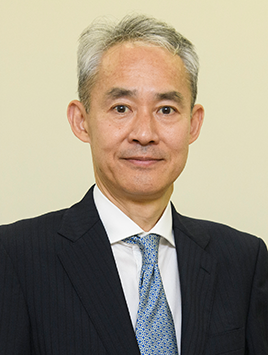
Sugio Baba
18th President, Senshu University
September 2025